





Can Taban Deng Gai Succeed Where Machar and Bol Mel Failed?
By Abraham Madit Majak | Independent Political Analyst, South Sudan Eagle Media
South Sudan’s political history since independence has been defined by a troubling pattern: leaders rise with promise, only to falter under the weight of ethnic division, weak institutions, and corruption. Today, as Vice President Taban Deng Gai occupies a pivotal seat in the transitional government, the question many citizens quietly ask is unavoidable: Can he succeed where Dr. Riek Machar and Dr. Benjamin Bol Mel failed?
This is not merely a comparison of personalities. It is a test of whether South Sudan’s politics can finally move beyond survival and crisis management toward genuine transformation.
Dr. Riek Machar’s political journey mirrors the country’s instability. Once a central figure in the liberation struggle, he became First Vice President multiple times, yet mistrust and political rivalry plunged the country into civil war in 2013. The 2018 Revitalized Peace Agreement brought him back into government, but it did not erase the deep fractures within the political system.
His later suspension and prosecution only underscored a painful reality: power-sharing deals without institutional reform do not guarantee lasting peace.
Dr. Benjamin Bol Mel presented a different image — a businessman-turned-politician projecting technocratic competence and economic ambition. Yet his tenure was overshadowed by allegations of corruption and international scrutiny over infrastructure funds.
His removal from office demonstrated that development rhetoric without transparency quickly erodes public trust.
These two experiences reveal the twin crises of South Sudan: ethnic polarization and systemic corruption.
Taban Deng Gai stands at a crossroads shaped by both. Once a close ally of Machar, he defected during the civil war and aligned himself with President Salva Kiir Mayardit, eventually becoming First Vice President in 2016. That decision split rebel ranks and earned him criticism from sections of his own Nuer community.
Today, as Vice President and Chair of the Infrastructure Cluster, he occupies a role that could either reinforce the status quo or chart a new direction.
South Sudan’s politics remains deeply tied to ethnic identity. To succeed, Gai must demonstrate that his leadership serves the nation — not just alliances or factions. National legitimacy must replace factional loyalty.
Infrastructure development can transform lives — roads, bridges, energy, and water systems. But only if funds are transparently managed. Citizens demand visible results: projects completed, resources accounted for, and corruption curtailed.
Legal actions against political rivals cannot substitute for national healing. Stability achieved through suppression or exclusion is temporary. Sustainable peace requires inclusive dialogue and trust-building.
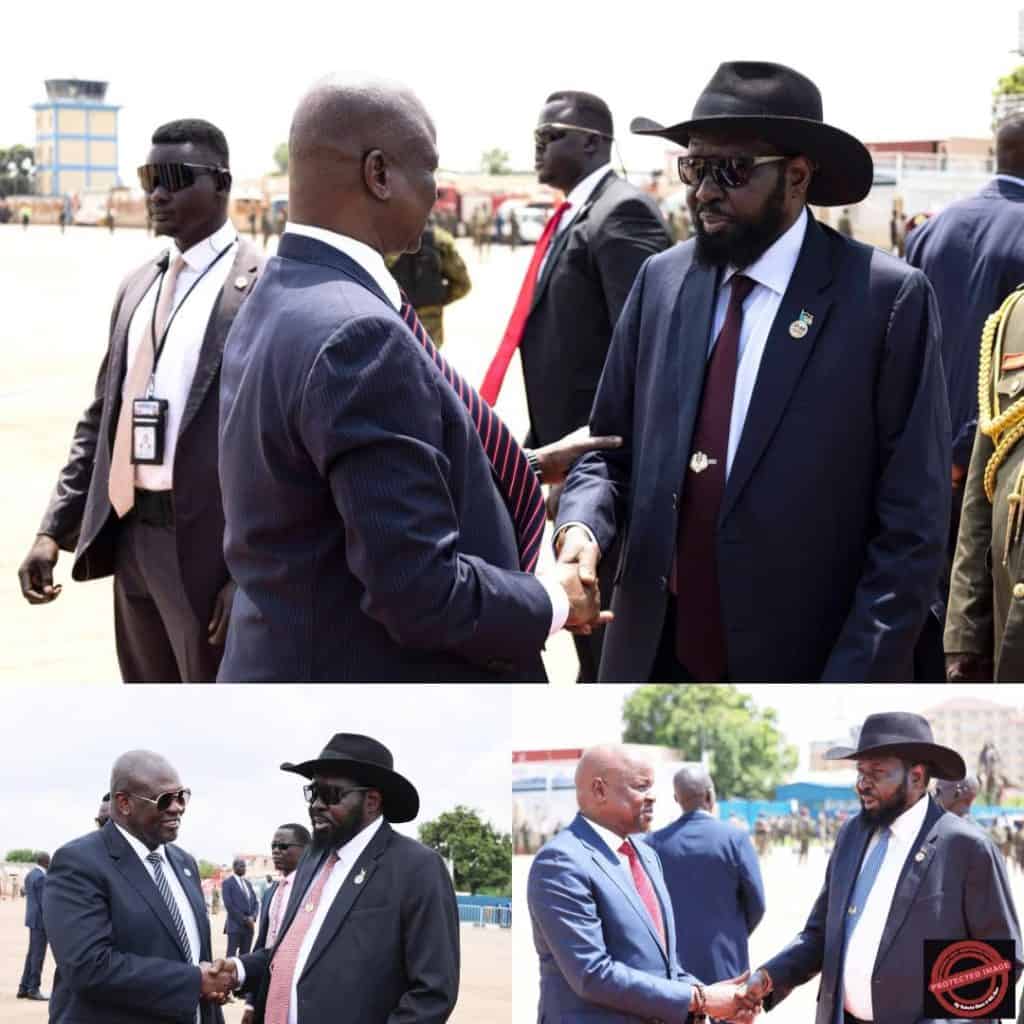
When President Salva Kiir Mayardit entrusted Vice President Taban Deng Gai with overseeing the country during his absence, it was not a random decision — it reflected political trust and confidence.
Gen. Taban Deng Gai has consistently positioned himself as a leader advocating for peace, political dialogue, and stability. In a country navigating complex transitional challenges, leadership grounded in peace is not optional — it is essential.
The President’s confidence in him signals unity at the top and reinforces the government’s commitment to continuity, order, and national cohesion.
But trust from above must now be matched with trust from below
The Defining Question
If success means merely avoiding renewed civil war, then maintaining relative stability may be enough. But that is a low bar for a country with such vast potential.
True success would mean:
- Strengthening institutions so they outlast individual leaders
- Reducing ethnic fear and political mistrust
- Curbing corruption through real accountability
- Shifting politics from personality-driven competition to policy-driven governance
Taban Deng Gai’s real test is not whether he can survive politically. Many have survived.
The real test is whether he can help transform the political culture that caused his predecessors to fail.
South Sudan does not need another leader who manages crises.
It needs leaders who prevent them.
Whether Vice President Gai rises to that challenge will define not only his legacy — but perhaps the next chapter of the nation itself.
Opinions expressed in articles published by RSSVP are those of the individual authors and do not necessarily represent the views of Rescue South Sudan Village People. RSSVP assumes no responsibility for the accuracy, validity, or reliability of claims made by contributors.
Author Bio
Abraham Madit Majak is a South Sudanese political commentator with a strong focus on governance, peace processes, and civic accountability. He regularly contributes to public discourse on South Sudan’s political transition, the role of state institutions, and the responsibilities of leadership during critical reform and nation-building periods.