Kenyan-Brokered Peace Talks: Another Chance—or the Last One—for South Sudan?
By Abraham Madit Majak | Independent Political Analyst, South Sudan Eagle Media
On February 9, South Sudan is set to enter yet another round of peace talks under the Kenyan-led Tumaini Initiative—a process carrying high expectations, deep public skepticism, and the heavy burden of repeated past failures. Marketed as a renewed push to break the country’s prolonged political deadlock, the initiative promises to deliver a National Consensus Charter for Peace and Democracy within four weeks. For many South Sudanese, the question is both simple and sobering: will this be a genuine breakthrough, or merely another well-packaged pause before the next crisis?
At its core, the Tumaini Initiative is an implicit admission that the 2018 Revitalised Agreement on the Resolution of the Conflict in South Sudan (R-ARCSS) has failed to deliver sustainable peace. The framework openly acknowledges “persistent challenges and outstanding implementation gaps”—diplomatic language that conceals years of missed deadlines, selective implementation, and elite bargaining conducted at the expense of ordinary citizens. In this sense, Tumaini is not replacing R-ARCSS; it is reacting to its inability to transform South Sudan’s political reality.
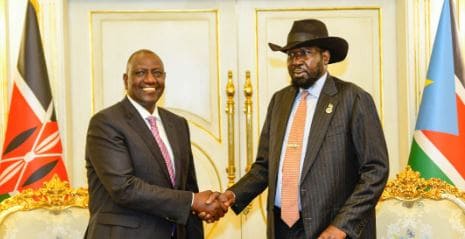
Kenya’s role—led personally by President William Ruto as Principal Facilitator—is both a potential asset and a significant risk. On the one hand, Nairobi brings diplomatic weight, regional credibility, and mediation experience. On the other, its close coordination with President Salva Kiir, emphasized as a means of ensuring “sovereign ownership and national legitimacy,” raises legitimate concerns. Will the process genuinely confront entrenched power structures, or will it simply re-legitimize the status quo? Peace efforts in South Sudan have not failed due to a lack of frameworks, but because political will consistently evaporates when reforms threaten elite interests.
The initiative’s stated shift toward “problem-solving rather than articulating fixed positions” sounds promising. South Sudan does not suffer from an absence of agreements; it suffers from an absence of implementation. By anchoring discussions in existing agreements and constitutional principles, Tumaini avoids reinventing the wheel. Yet this approach also risks recycling the same unresolved compromises that stalled previous negotiations—unless there is real pressure to take hard decisions, particularly on security sector reform, the unification of forces, and accountability.
Inclusivity is another strength—at least on paper. The inclusion of women leaders, faith-based and traditional authorities, and civil society reflects lessons drawn from past elite-dominated negotiations. However, inclusion must be substantive, not symbolic. Too often, civil society actors have been invited into conference halls only to be sidelined when real decisions are made behind closed doors. If Tumaini is to be different, these voices must shape outcomes, not merely legitimize them.
The credibility of the talks is further undermined by their troubled history. Launched in Nairobi in December 2023 at President Kiir’s request, the Tumaini Initiative initially sought to accommodate opposition movements excluded from R-ARCSS. By mid-2024, Juba accused the process of legitimizing rebellion. By February 2025, the talks had been adjourned for the third time without tangible results, collapsing under mutual suspicion and political infighting. Restarting the same process without addressing the reasons for its earlier failure risks repeating a familiar and costly cycle.
Timing makes the stakes even higher. South Sudan is once again edging toward open conflict, with escalating fighting between the SSPDF and SPLA-IO forces loyal to the detained First Vice President, Dr. Riek Machar, particularly in northern Jonglei. Regional and international monitors warn of a possible return to full-scale war as the 2018 peace deal continues to unravel. In this context, Tumaini is not just another dialogue—it may be the last diplomatic buffer before widespread violence resumes.
Ultimately, the success of the Kenyan-brokered talks will not be measured by the elegance of a new charter or the speed of negotiations, but by concrete actions: an immediate cessation of hostilities, genuine civilian protection, unhindered humanitarian access, and irreversible steps toward security reform and credible elections. Without these, Tumaini risks becoming yet another well-intentioned document added to South Sudan’s long archive of broken promises.
For South Sudanese citizens, hope is no longer cheap—it is exhausted. February 9 must mark not merely the resumption of talks, but a decisive shift from political survival games to national rescue. If leaders fail again, history will not remember Tumaini as an initiative of hope, but as a missed final warning before the country slipped back into war.
Opinions expressed in articles published by RSSVP are those of the individual authors and do not necessarily represent the views of Rescue South Sudan Village People. RSSVP assumes no responsibility for the accuracy, validity, or reliability of claims made by contributors.