South Sudan Cannot Vote Its Way Out of a Broken Transition
By Abraham Madit Majak
South Sudan’s transition was never meant to be a race to the ballot box. It was designed as a carefully sequenced process — one that prioritizes peace, security, inclusion, and reform before elections. The recent decision by the presidency to amend the 2018 Revitalized Peace Agreement (R-ARCSS) in order to hold elections by December 2026 risks reversing that logic, with potentially grave consequences for the country’s fragile stability.
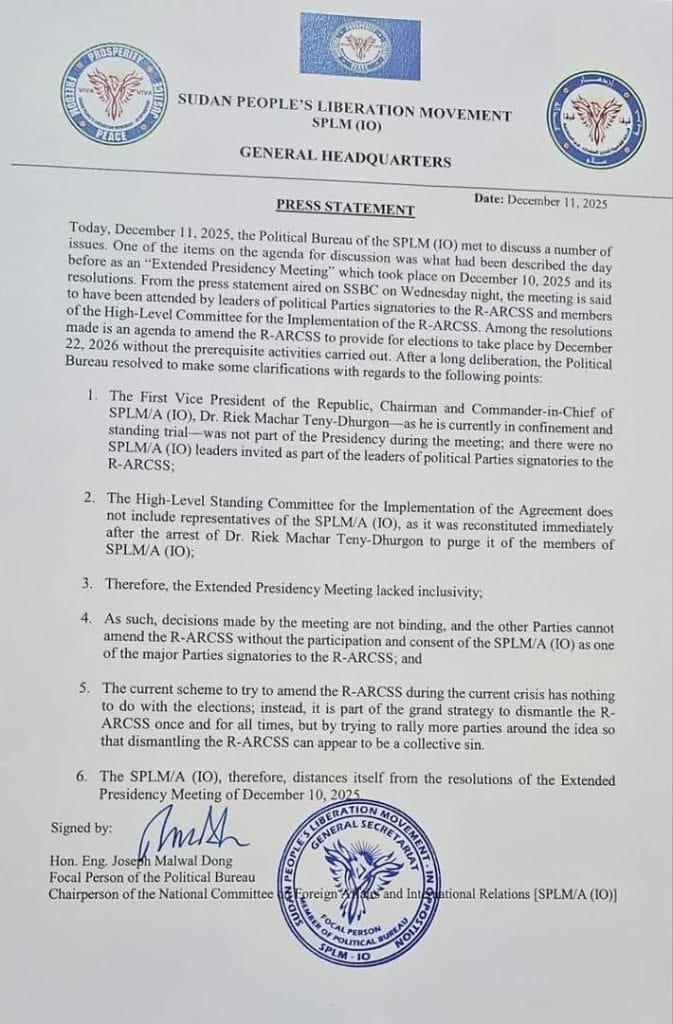
The rejection of this decision by the SPLM-IO faction loyal to suspended First Vice President Dr. Riek Machar should not be viewed simply through the lens of party politics. It raises a broader and more troubling question: can elections held through exclusion, unilateralism, and unfinished reforms genuinely advance peace and democracy in South Sudan?
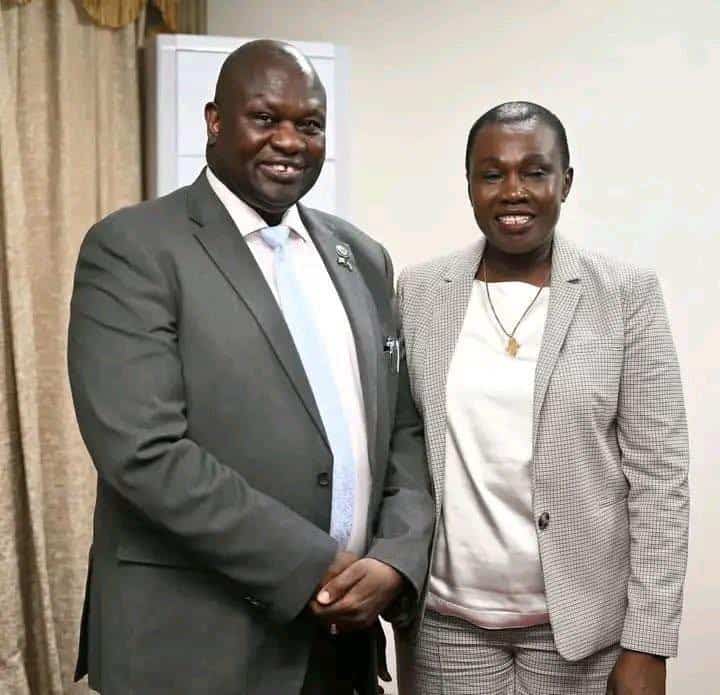
At the heart of the controversy lies the principle of inclusivity — a foundational pillar of the 2018 peace agreement. Decisions to amend the agreement were taken at a high-level meeting chaired by President Salva Kiir, yet one of the principal signatories to the deal was absent. Dr. Machar remains under house arrest, and representatives of the mainstream SPLM-IO were neither invited nor consulted. In a transition already burdened by mistrust, such a process deepens divisions rather than healing them.
Peace agreements are not optional frameworks that can be reshaped at convenience. They are binding commitments intended to prevent a return to conflict. Amending the R-ARCSS without the consent of all principal parties undermines its legitimacy and sets a dangerous precedent: that power, not consensus, determines the course of the transition.
Equally concerning is what the proposed amendments effectively postpone. Key provisions of the agreement remain unimplemented — permanent security arrangements, the constitution-making process, a national population census, and essential institutional reforms. These are not technical details; they are the foundations of credible elections. Without unified forces, a clear constitutional order, accurate population data, and reformed institutions, elections risk becoming symbolic exercises rather than meaningful democratic choices.
South Sudan’s recent history offers painful lessons. Political processes that ignore trust, inclusivity, and security do not stabilize the country — they destabilize it. Elections conducted in a polarized and unreformed environment are more likely to inflame tensions than resolve them.
The continued detention of political leaders further compounds the crisis. A transition guided by coercion rather than dialogue cannot deliver lasting peace. Democratic credibility depends not only on dates and ballots, but on freedom, participation, and confidence in the process.
For ordinary South Sudanese, the priority is not the speed of elections, but their legitimacy. Citizens want a country where votes count, institutions work, and leaders are chosen peacefully — not another cycle of contested outcomes and political violence.
South Sudan does not need rushed elections; it needs a rescued transition. That requires recommitting to the full and faithful implementation of the peace agreement, restoring inclusive dialogue among all signatories, releasing political detainees, and completing the reforms that make elections meaningful.
If the country is to move forward sustainably, the ballot must be the result of peace — not a substitute for it.
Author Bio
Abraham Madit Majak is a South Sudanese writer and commentator focusing on governance, peace processes, and civic accountability. He contributes regularly to discussions on South Sudan’s political transition, the role of institutions, and the responsibilities of leadership during critical reform periods.