The Beheading in Waat: A Line That Must Never Be Crossed
By Abraham Madit Majak
Independent political analyst and commentator on South Sudan
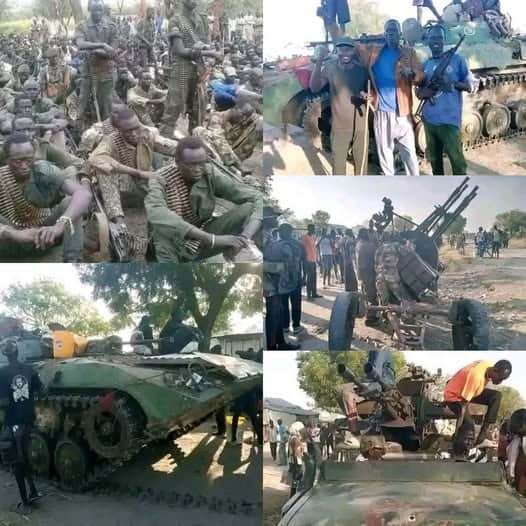
The beheading of a human being by the White Army and SPLA-IO forces after the capture of Waat from the South Sudan People’s Defence Forces (SSPDF) on Christmas Day is an act that must be condemned in the strongest possible terms. This was not only a crime committed against an individual; it was an assault on humanity itself. Such barbaric violence represents extreme brutality and evil, violates the most basic principles of human dignity, and shatters any claim to moral or political legitimacy by those responsible.
Christmas Day is universally recognized as a moment of peace, reflection, and compassion. To commit such an atrocity on a day symbolizing reconciliation and hope deepens the moral weight of the crime. It exposes a dangerous descent into cruelty that has no place in a society striving for peace after years of devastating conflict.
Beheading is not an act of war—it is an act of terror. International humanitarian law is unequivocal: even in armed conflict, combatants and civilians alike are protected from cruel, inhuman, and degrading treatment. Summary executions, mutilation of bodies, and acts meant to instill fear among populations are prohibited under the Geneva Conventions and constitute war crimes. No political grievance, military objective, or historical injustice can justify such conduct.
The White Army and the SPLM-IO must therefore be condemned not only for perpetrating this act, but for enabling a culture of violence in which such crimes become possible. Leadership—whether formal or informal—carries responsibility. When armed groups fail to restrain their fighters, fail to enforce discipline, or tacitly endorse brutality through silence, they become complicit. Condemnation must be clear and unambiguous, not selective or conditional.
Beyond the immediate crime, the beheading in Waat sends a chilling message to civilians across the country. It reinforces fear, fuels cycles of revenge, and undermines already fragile efforts toward national cohesion. Ordinary citizens—women, children, elders—are once again left to bear the cost of power struggles they did not create. Each atrocity pushes reconciliation further out of reach and deepens mistrust between communities.
This act also raises serious questions about accountability in South Sudan. Too often, perpetrators of grave abuses escape justice, emboldened by impunity and political protection. If crimes of this magnitude are allowed to pass without consequence, violence will continue to be normalized. The country cannot move forward while the blood of civilians and captured individuals stains its conscience.
The Government of South Sudan, regional bodies, and international partners must respond with urgency. Independent investigations must be conducted, those responsible identified, and justice pursued through credible legal mechanisms. Accountability is not an obstacle to peace; it is a foundation for it. Without justice, peace agreements remain fragile documents, easily torn apart by the next act of violence.
Equally important is the role of South Sudanese voices—religious leaders, civil society, youth, and community elders. Silence in the face of such brutality is dangerous. Moral clarity is required. Every political movement and armed group must be told plainly: acts of extreme brutality and evil will not be tolerated, excused, or forgotten.
The beheading in Waat must serve as a turning point. South Sudan stands at a crossroads—between continued cycles of violence and a difficult but necessary path toward peace grounded in respect for human life. The choice should be obvious. Our shared humanity demands that we reject barbarism in all its forms and insist on dignity, accountability, and justice for every human being.
Author Bio
Abraham Madit Majak is a South Sudanese writer and political commentator with a strong focus on governance, peace processes, and civic accountability. He regularly contributes to public discourse on South Sudan’s political transition, the role of state institutions, and the responsibilities of leadership during critical reform and nation-building periods.